
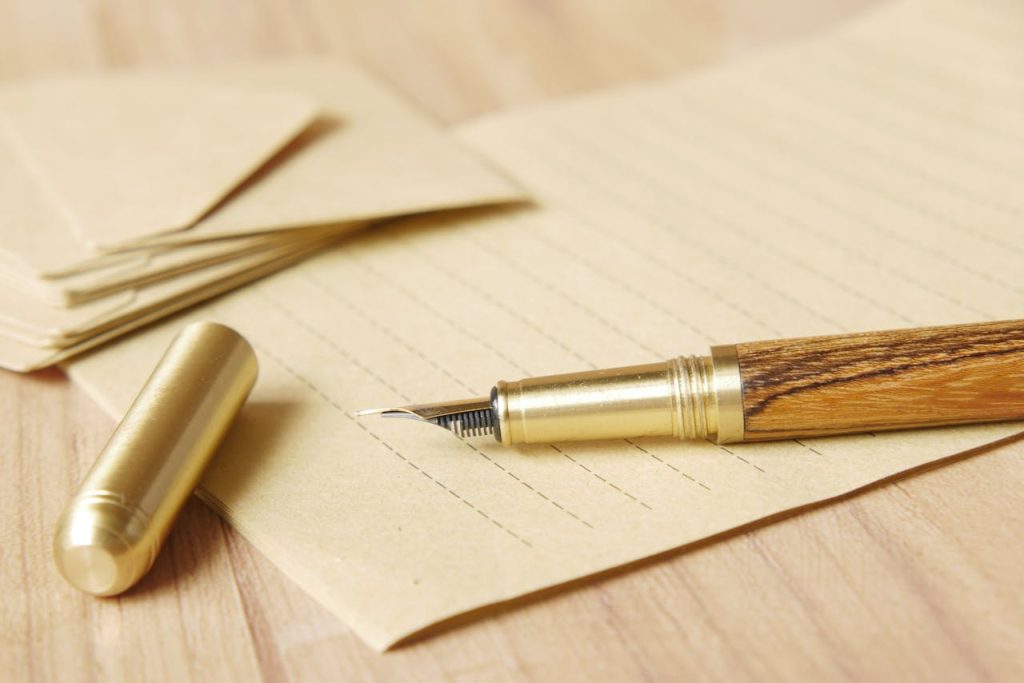
In February 2025, I wrote an article titled “I Miss Writing Letters.” In that piece, I reflected on a time when writing letters was an emotional experience—each word carried warmth, connection, and a personal touch. Recently, I came across an interesting video that revisited this idea from a completely new perspective. It highlighted how writing with a fountain pen on paper is not just emotionally fulfilling, but also beneficial for our body and, more importantly, our brain.
According to a study conducted between 2011 and 2019 by Japanese neurologist Dr. Hiroshi Tanaka, seniors who spent just 10–15 minutes a day writing by hand showed little to no signs of dementia or cognitive decline. Cognitive ability plays a crucial role in our lives—it influences how we learn, make decisions, solve problems, and adapt to new situations.
One of the most interesting findings of this research was that the participants did not share similar lifestyles. Some followed a healthy diet, while others did not. Some exercised regularly, while others led a sedentary life. Their sleep patterns also varied significantly. Yet, despite these differences, one common factor stood out clearly—they all engaged in handwriting instead of relying on typing or mobile communication.
Dr. Tanaka emphasized that writing is not a passive activity. It requires effort, attention, and intention. When we write on paper, every letter we form activates our brain. We think, select words, structure sentences, and physically create them—this entire process becomes a powerful exercise for the mind.
In the study, participants were divided into two groups—those who primarily typed and those who wrote by hand. After six months, the results were quite revealing. Individuals who practiced handwriting demonstrated sharper memory and better cognitive performance. Brain scans further showed that handwriting activates multiple regions of the brain associated with motor skills, spatial awareness, language processing, and memory encoding. In contrast, typing does not engage the brain with the same depth and intensity.
These individuals were not only better at remembering names, but they also spoke more fluently and processed information more efficiently. Their daily lives were more organized, and they experienced less confusion in routine activities. This clearly indicates that handwriting contributes significantly to maintaining mental clarity and overall cognitive health.
The conclusion we can draw from this is both simple and powerful—memory decline is not an inevitable consequence of aging. In many cases, it is the result of underutilizing the brain. The human brain functions much like a muscle—the more we use it, the stronger and more efficient it becomes. Regular mental exercise is essential to keep it active and healthy.
A few months ago, I had the privilege of meeting 97-year-old industrialist Lakshmi Narayan Jhunjhunwala, the founder of the LNJ Bhilwara Group. Even at this remarkable age, he spends nearly six hours every day reading and writing—three hours in the morning and three in the evening. When I looked at his diary, I was amazed by the clarity and elegance of his handwriting. More inspiring, however, was his mental sharpness—he actively discussed current topics with clarity, confidence, and depth. His discipline and daily habits clearly reflect the power of continuous mental engagement.
If we look back at our school days, we can recall a simple yet effective method used by teachers. Whenever we forgot the spelling of a word, we were asked to write it repeatedly. At that time, it seemed like a routine exercise, but in reality, it was one of the most effective ways to strengthen memory and retention.
In today’s digital age, while technology has undoubtedly made our lives easier, it has also led to the gradual disappearance of some valuable habits. Writing is one such habit. Children and even adults now rely more on typing than handwriting. Even examination systems are slowly evolving in that direction. It is possible that in the near future, writing by hand may become even less common.
However, it is important that we do not abandon this powerful practice. Especially when its benefits are so profound and far-reaching, we must consciously preserve and continue it.
So, let us take a simple yet meaningful pledge today—pick up a pen and write on paper for at least 15 minutes every day. It may seem like a small effort, but its impact can be truly transformative. This habit can significantly improve our daily routine, enhance our mental well-being, and keep our minds active for years to come.
Because in the end, an active mind empowers us to say—“Never Say Retired.”
Author

The author is the founder of the Never Say Retire mission. In order to achieve this goal, he also runs this website and his Facebook group Never Say Retire Forum has Hundreds and Thousands of members today.