
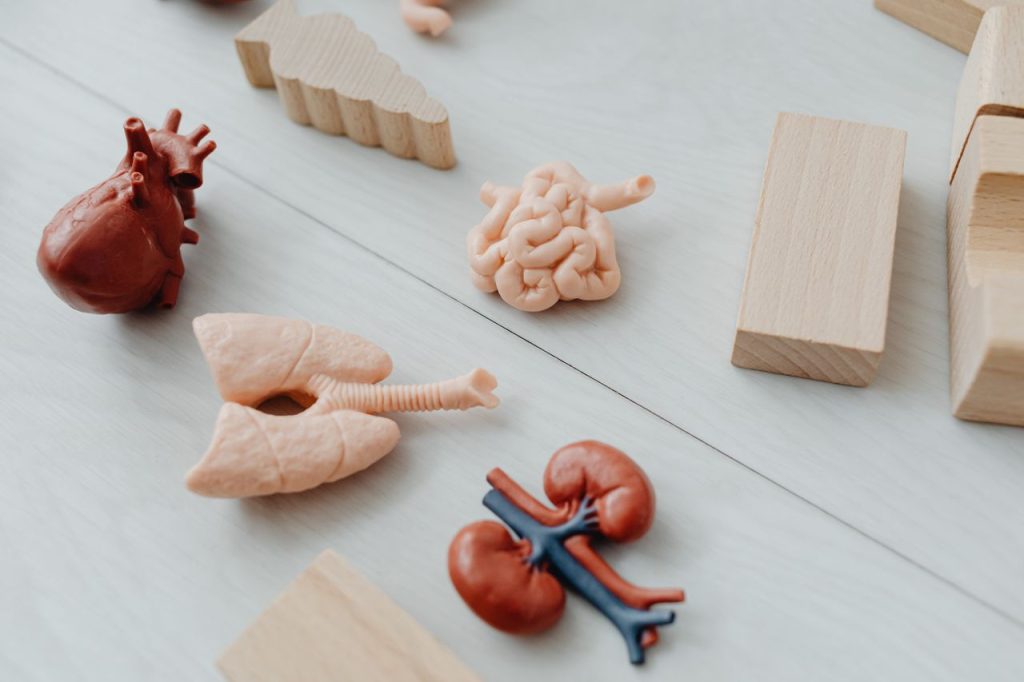
Organ Donation Day was observed on 13 August. Every year, this day reminds us that even after we are gone, we can leave behind a ray of light in someone else’s life. But when the subject of organ donation comes up, one question may arise, particularly in the minds of senior citizens — can my organs still be of use at my age?
The answer is — yes, age by itself is not always a barrier.
There is no fixed maximum age limit for organ donation after death. At the time of death, doctors determine which organs or tissues are suitable for transplantation. Therefore, reaching the age of 60, 70 or even 80 does not, by itself, exclude a person from becoming an organ donor.
This is particularly important for senior citizens. We should not ourselves step back assuming, “What use could my organs possibly be now?” Medical science looks not merely at age, but at the actual condition and usability of organs at the time of death. Even tissues such as the corneas of people in their 70s and 80s may be useful in restoring someone’s sight.
Prime Minister Narendra Modi has expressed the importance of organ donation in very simple words:
One decision of yours can save the lives of many and give them life.
In Mann Ki Baat in 2023, the Prime Minister also cited the example of 63-year-old Snehlata Chaudhary of Jharkhand. Her organ donation helped four people receive organs and helped restore the eyesight of two others. Think about it—after the death of a 63-year-old woman, how many lives were able to move forward.
The Prime Minister expressed the spirit of organ donation in another beautiful sentence:
Even as we leave this life, if someone else’s life can be saved, that is the greatest भावना behind organ donation.
This thought has special significance for senior citizens.
We have spent a major part of our lives giving to our families. We brought up our children, fulfilled our responsibilities and contributed to society. Even after retirement, we say that there is still much to do in the second innings of life. So, does our contribution in the second innings necessarily have to end with our death?
The great cricketer Anil Kumble has explained organ donation very beautifully in the language of cricket:
“Just as the second innings is important in a Test match, organ donation is important in life too. One person’s second innings can help carry forward the first innings of someone in need.”
In other words, one person’s second innings can help another person’s first innings continue.
But the decision to donate organs should not be taken merely out of emotion. It involves several mental and family-related questions.
Some senior citizens may feel uncomfortable even thinking about what will happen to their body after death. Some may have religious or social reservations. Someone may fear that if doctors know they are an organ donor, their treatment might somehow be compromised. And sometimes the family may not be ready to accept such a decision.
These concerns should not be brushed aside. Organ donation should be a voluntary, informed and personal decision. No senior citizen should be pressured by family, society or any institution.
But if you have decided to donate your organs, do one thing — tell your family.
Simply registering is not enough. Speak openly to your children and close relatives and tell them about your wishes. At the time of death, the family is already going through an emotional crisis. If they know your wishes beforehand, it will be easier for them to take a decision at that difficult moment.
It is also important to understand that living organ donation and organ donation after death are two different things. Different medical and legal rules apply to living donation. Therefore, before making any decision, one should obtain accurate information from an authorised medical institution or NOTTO.
We always tell senior citizens—Never Say Retired. Retirement does not mean the end of contribution. There is still much that can be done for society in the second innings of life. Organ donation may perhaps be the final and most unique example of such contribution.
Our eyes may help someone see the world. One of our organs may give another person a new beginning in life. Even after we are gone, someone’s mother may keep her child alive; a child may get his father back; a young person may get a second chance at life.
So, let us not look at organ donation merely as thinking about death. Let us look at it as a commitment to carrying life forward.
We do not know when our second innings will end. But whether someone else’s first innings can begin after that—perhaps that decision is in our hands.
Author

The author is the founder of the Never Say Retire mission. In order to achieve this goal, he also runs this website and his Facebook group Never Say Retire Forum has Hundreds and Thousands of members today.